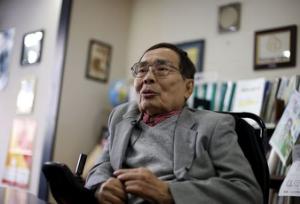
President of the non-profit Human Care Association Shoji Nakanishi, 72, who has been wheel-chair bound since a spinal cord injury at age 21, speaks during an interview with Reuters in Tokyo, Japan, February 18, 2016. REUTERS/Yuya Shino
By Linda Sieg TOKYO (Reuters) – Retired Japanese airline employee Tarou Tanzawa said he hadn’t thought much about his own death until his 84-year-old mother was diagnosed with malignant lymphoma and decided against costly and invasive life-prolonging treatment. Soon after, Tanzawa made his own “living will”, stipulating he did not want life-prolonging treatment if he became terminally ill or was in a vegetative state. “I felt it was too soon (for my mother to die) but I also thought ‘Ah, there is this way of dying,” Tanzawa, now 68, told Reuters.
Original post:
Aging, indebted Japan debates right to ‘die with dignity’