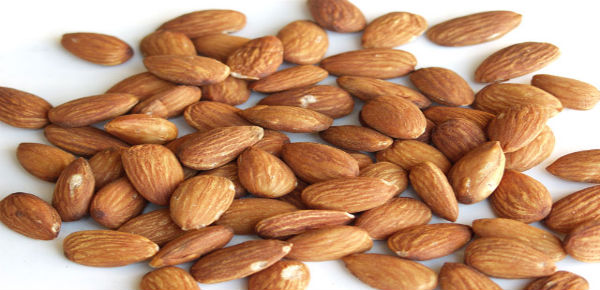
Four Benefits of Almonds
January 19, 2011 by publisher · Leave a Comment
Most doctors recommend that one should eat almonds regularly, and in taking that advice, one will find that whether they fancy the bitter or sweet variety, it often tends to have a lot of benefits that affect from the health standpoint.

Thanks to a host of nutrients that are present in these nuts, one can enjoy the health benefits that come along with it spanning relief from constipation all the way to impotency and diabetes.
Here is a specific list of benefits that one can get from almonds if consumed on a daily basis:
1. Cholesterol Regulation
Studies have shown that in eating almonds regularly, the levels of high density lipoproteins (HDL) increase while the levels of low density lipoproteins (LDL) reduce as well. Of course, the reason why this is beneficial for the heart is because HDL is considered as ‘bad cholesterol’ and LDL is known as ‘good cholesterol’.
2. Food for thought
Considered as a brain food, the reason for this is because there are several nutrients that assist in the development of the brain. Almonds are also an excellent source of nutrition for growing children.
3. Weight Loss
While this is something that most people are obsessed with, drinking unsweetened almond milk will help one reduce weight as the mono-unsaturated fat in almonds sates one’s appetite while most likely preventing one’s chances of overeating.
4. Increases energy levels
The nutrients such as Riboflavin, copper and manganese play an instrumental role in increasing one’s energy levels.
Four Missing Nutrients in Your Diet
January 18, 2011 by publisher · Leave a Comment
If there’s anything that people want to know these days, it is about how they can improve their health by following a healthy diet. And while nutrients such as protein, good fats and carbohydrates get a lot of attention from diets everywhere, there are some nutrients that are just as important but have somehow slipped off the radar somewhere.

According to the USDA, here are a few nutrients that people don’t necessarily pay attention to when they should:
1. Potassium
Despite being one of the key nutrients to keep your blood pressure at healthy levels apart from other benefits, Americans don’t eat as much potassium as they should. One can find sweet potatoes, potatoes and bananas to have high levels of this important nutrient.
2. Magnesium
Alcoholics and the elderly, in particular, have low levels in magnesium and while the lack of this nutrient in the body is linked to diseases such as osteoporosis, heart disease and high blood pressure, one should definitely include spinach, nuts, beans and peas regularly for their diet.
3. Vitamin A
Since there are two types of vitamin A: carotenoids and retinol, it’s the former that most Americans don’t get enough of. Carotenoids are found in several fortified cereal, spinach, carrots and sweet potatoes.
4. Vitamin E
Considered as an antioxidant that is absolutely imperative for immunity, healthy skin and better vision, this is one of those all-important nutrients that Americans miss out on. Some foods that contain Vitamin E are peanut butter, hazelnuts, sunflower seeds and almonds.
Four Myths About HIV
January 17, 2011 by publisher · Leave a Comment
HIV is anything but temporary, and while there are several people who live with it, day in and day out, the ones who do know that their time is up live under the proverbial Damocles sword, wondering when their time will come.
And if that’s not enough, they also feel ostracized by society due to the fact that there are several myths flying around, and since some of these myths border from the bizarre to the atrocious, here are a few that can help alleviate the pressure that HIV patients face.
1. Casual contact can spread AIDS/ HIV
One cannot get AIDS/ HIV from casual contact with a person who has this deadly disease. Even if you drink from the same glass, share the same towel or even hug each other, this is not how the disease infects another person.
2. HIV shortens one’s lifespan
This is not true as some people get AIDS in a few months while others can live with it for years to come, just like other normal people.
3. There is a cure for AIDS/ HIV
Unfortunately, there isn’t a cure for HIV/AIDS even now. All your doctor can do for you is prescribe drugs that will keep the virus levels low in the body, thus keeping your immune system intact for as long as possible.
4. You cannot get lifesaving HIV drugs without insurance
Truth be told, there are several pharmaceutical companies, nonprofit groups and government programs that will assist you in getting these drugs, and while they are very expensive, the truth is that one can get assistance.
How to Quit Smoking
January 16, 2011 by publisher · Leave a Comment
While the paradigm “Once a smoker, always a smoker” continues to exist amongst people who have tried to quit but haven’t been able to in recent years. While doctors still consider the craving for sweets to be more powerful than quitting your smokes, people still seem to struggle and continue to lose the battle against nicotine.
But if you are still interested in quitting, here are a few steps that can help you to do so:
1. Understanding why you want to quit
If you wish to quit, the just knowing that it is not good for you isn’t enough. To motivate you to quit requires something much more than this. Some example of powerful motivators could be to protect your family from the second-hand smoke from your cigarettes or even the fear of lung cancer, and even worse, that of death.
2. Cold Turkey is not an option
If you want to quit, choose smoking cessation methods that are available instead of going cold turkey. Since your brain is already addicted to nicotine, you will not be able to quit it immediately. So look for nicotine replacements therapies such as chewing gum, patches and lozenges, and if it is too bad, ask your doctor for prescription pills.
3. Ask for support
Let’s face it: once you decide to quit, there will several times when you feel like smoking a cigarette, and in the presence of certain “triggers”, you might give into the temptation to take a drag or two. So, take help from your loved ones and friends who can support you while you quit.
Foods That Help You Sleep Better
January 15, 2011 by publisher · Leave a Comment
There’s no doubt that when it comes to being able to perform at one’s best at work, one must have a good night’s sleep. And while many continue to take sleeping pills, medication does not need to be the last resort especially since there are better ways to help you get a good night’s rest.

So, here are some suggestions of foods that will help you avoid sleepless nights:
1. Dairy Products
Studies have shown that people can get excellent sleep from consuming milk, yoghurt and dairy products, in general. Since the calcium available in these products soothes your nerves and reduces your stress levels, these products are excellent for ensuring that one gets a good night’s rest.
2. Miso Soup
Considered an excellent choice for those struggling with insufficient sleep, this soup has amino acids in abundance which manufactures melatonin as well. And this will result in one getting a good amount of sleep.
3. Almonds
Being a good source of magnesium and protein, almonds help in muscle relaxation and in getting a good night’s rest as well.
4. Oatmeal
Since oatmeal is rich in several nutrients such potassium, calcium, magnesium and phosphorus, moderate consumption will help you get a good night’s sleep. Just remember to not add sugar to the oatmeal.
5. Avoid caffeine
Avoid caffeine in any form especially in beverage form, and instead try options such as chamomile and green tea that are excellent for a good night’s rest.
Building a 30min runnning habit
January 5, 2011 by admin · Leave a Comment
Contrary to popular belief, Lorem Ipsum is not simply random text. It has roots in a piece of classical Latin literature from 45 BC, making it over 2000 years old. Richard McClintock, a Latin professor at Hampden-Sydney College in Virginia, looked up one of the more obscure Latin words, consectetur, from a Lorem Ipsum passage, and going through the cites of the word in classical literature, discovered the undoubtable source. Lorem Ipsum comes from sections 1.10.32 and 1.10.33 of “de Finibus Bonorum et Malorum” (The Extremes of Good and Evil) by Cicero, written in 45 BC. This book is a treatise on the theory of ethics, very popular during the Renaissance. The first line of Lorem Ipsum, “Lorem ipsum dolor sit amet..”, comes from a line in section 1.10.32.
The standard chunk of Lorem Ipsum used since the 1500s is reproduced below for those interested. Sections 1.10.32 and 1.10.33 from “de Finibus Bonorum et Malorum” by Cicero are also reproduced in their exact original form, accompanied by English versions from the 1914 translation by H. Rackham.
Article submitted by Alex Saroyan of Health And Fitness Centre.
What is the one rep max?
January 5, 2011 by admin · Leave a Comment
Contrary to popular belief, Lorem Ipsum is not simply random text. It has roots in a piece of classical Latin literature from 45 BC, making it over 2000 years old. Richard McClintock, a Latin professor at Hampden-Sydney College in Virginia, looked up one of the more obscure Latin words, consectetur, from a Lorem Ipsum passage, and going through the cites of the word in classical literature, discovered the undoubtable source. Lorem Ipsum comes from sections 1.10.32 and 1.10.33 of “de Finibus Bonorum et Malorum” (The Extremes of Good and Evil) by Cicero, written in 45 BC. This book is a treatise on the theory of ethics, very popular during the Renaissance. The first line of Lorem Ipsum, “Lorem ipsum dolor sit amet..”, comes from a line in section 1.10.32.
The standard chunk of Lorem Ipsum used since the 1500s is reproduced below for those interested. Sections 1.10.32 and 1.10.33 from “de Finibus Bonorum et Malorum” by Cicero are also reproduced in their exact original form, accompanied by English versions from the 1914 translation by H. Rackham.
Working your way upto 100 pushups
January 5, 2011 by admin · Leave a Comment
Contrary to popular belief, Lorem Ipsum is not simply random text. It has roots in a piece of classical Latin literature from 45 BC, making it over 2000 years old. Richard McClintock, a Latin professor at Hampden-Sydney College in Virginia, looked up one of the more obscure Latin words, consectetur, from a Lorem Ipsum passage, and going through the cites of the word in classical literature, discovered the undoubtable source. Lorem Ipsum comes from sections 1.10.32 and 1.10.33 of “de Finibus Bonorum et Malorum” (The Extremes of Good and Evil) by Cicero, written in 45 BC. This book is a treatise on the theory of ethics, very popular during the Renaissance. The first line of Lorem Ipsum, “Lorem ipsum dolor sit amet..”, comes from a line in section 1.10.32.
The standard chunk of Lorem Ipsum used since the 1500s is reproduced below for those interested. Sections 1.10.32 and 1.10.33 from “de Finibus Bonorum et Malorum” by Cicero are also reproduced in their exact original form, accompanied by English versions from the 1914 translation by H. Rackham.